For practices
Claim rejections and denials, and how to handle each one
A rejected claim and a denied claim need different fixes and run on different deadlines. How to tell which one you've got and what to do with it.
2 minute readBy the Fieldstone Billing teamUpdated
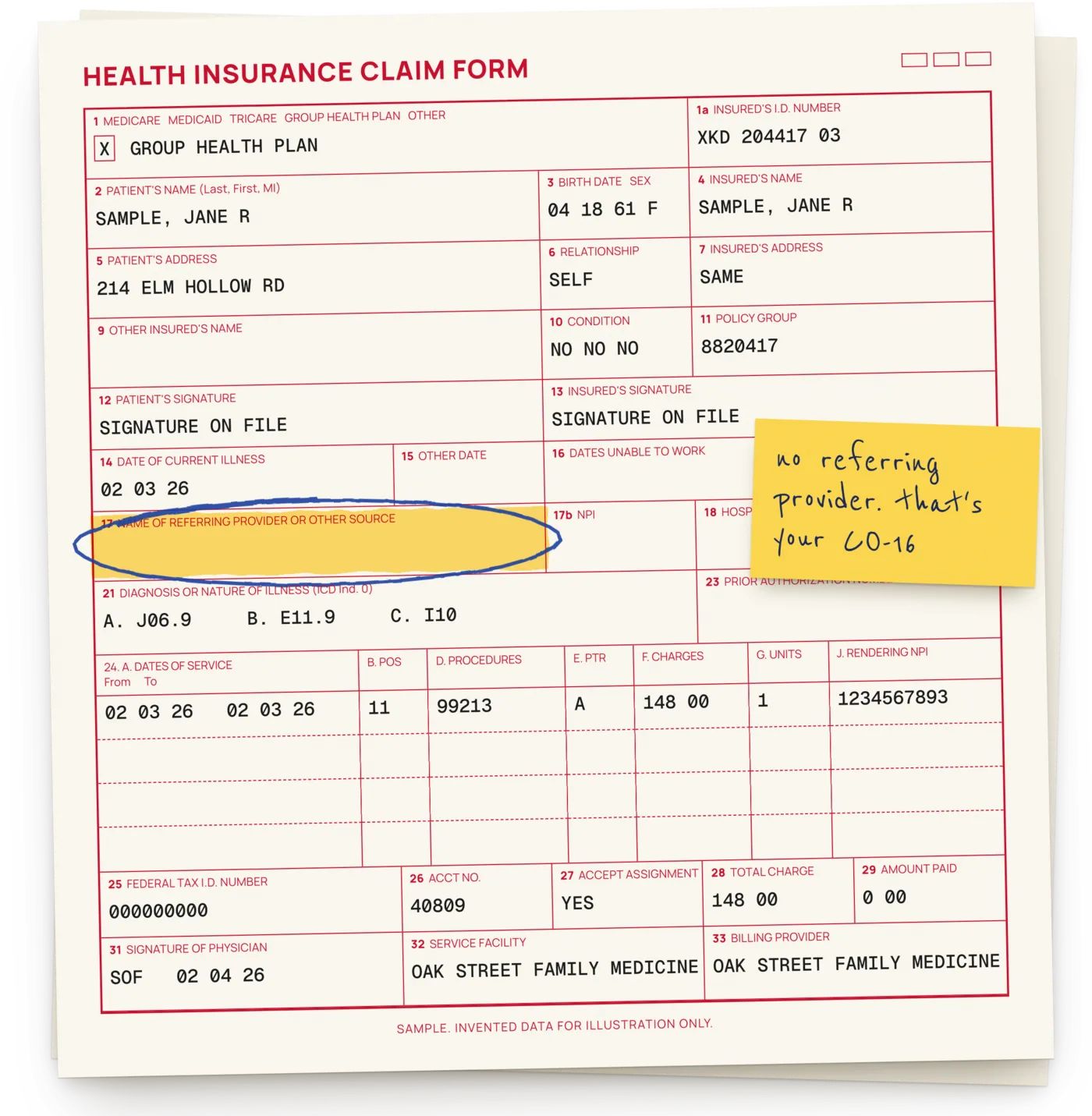
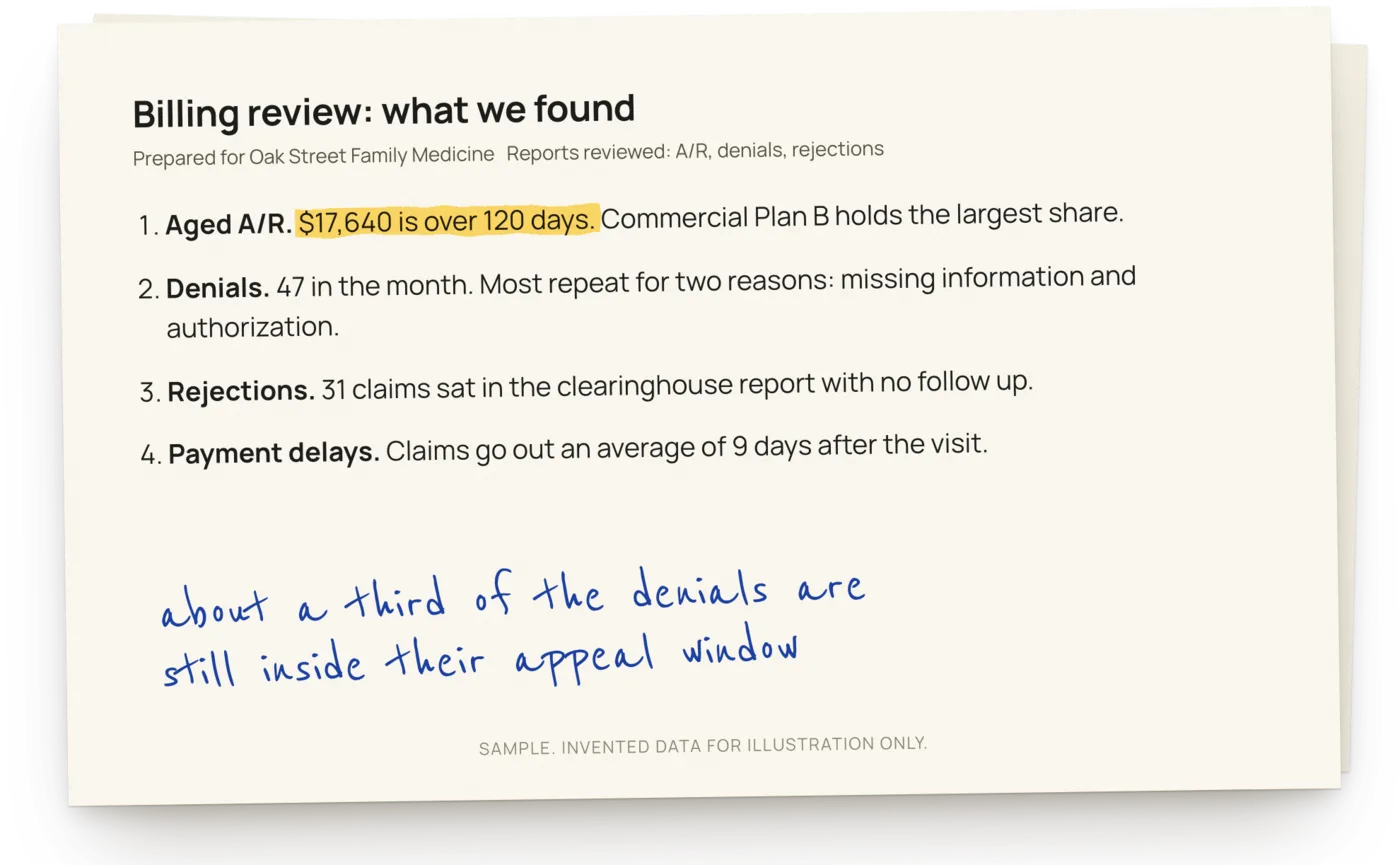
People in billing offices often use these two words as if they mean the same thing. They don’t, and treating one like the other can waste weeks or lose the claim. If a claim bounces at the clearinghouse because the member ID is missing a digit and someone in the office files an appeal, the payer has no processed claim to appeal, so a few weeks go by with nothing happening while the filing clock keeps running.
The two side by side
| Rejected claim | Denied claim | |
|---|---|---|
| What happened | Stopped before the payer processed it | Processed by the payer, and not paid |
| Where you see it | Clearinghouse or payer front end report | Remittance advice (ERA or EOB) |
| Usual cause | Format or data errors | Coverage, coding, authorization or policy reasons |
| What to do | Fix it and resubmit it as a new claim | Send a corrected claim, or appeal |
| Filing limit | The original claim filing limit keeps running | Appeal or corrected claim limits usually apply |
That “new claim” line trips people up. Don’t send a rejected claim back marked as a corrected or replacement claim, because the payer has nothing on file to replace and may reject it again.
How rejections get lost
A rejection may not appear in your denial reports, since the claim was never adjudicated. If nobody checks the clearinghouse reports, a rejected claim can sit there unnoticed until the filing limit passes. And because the payer never processed it, you may have no proof of timely filing beyond the clearinghouse record.
The causes tend to be small and dull, which is part of why they get ignored. These are the common ones:
- A wrong or missing member ID
- A patient name or date of birth that doesn’t match the payer’s record
- A wrong payer ID
- Invalid or missing provider identifiers
- Missing required fields
Think of a patient who got married and gave the front desk her new name while her insurance still has the old one. Her claim can bounce on the name alone, even though the coverage is fine.
Deciding what to do with a denial
A denial needs a decision, and that starts with reading the reason and remark codes on the remittance. If your claim contained an error, send a corrected claim. If the claim was right and the decision appears wrong, ask for a reconsideration or file an appeal. Patient billing only comes into it if the remittance and your contracts allow it. And when nothing else applies, write it off with a recorded reason.
Our guide to common denial codes covers the codes you’ll see most often.
A routine to keep up with both
- Check clearinghouse rejection reports at least weekly, and clear them first.
- Sort denials by deadline and dollar value.
- Record a reason for each claim you close.
- Review the top causes each month, and fix them upstream.
If nobody at your practice has time for this, you can hand it to an outside team. We do that work under denial management.