For billing company owners
What happens to client contracts when you sell a billing company
How assignment clauses, consent, notice periods and handshake clients affect the sale of a billing company, and what to check before you talk to a buyer.
3 minute readBy the Fieldstone Billing teamUpdated
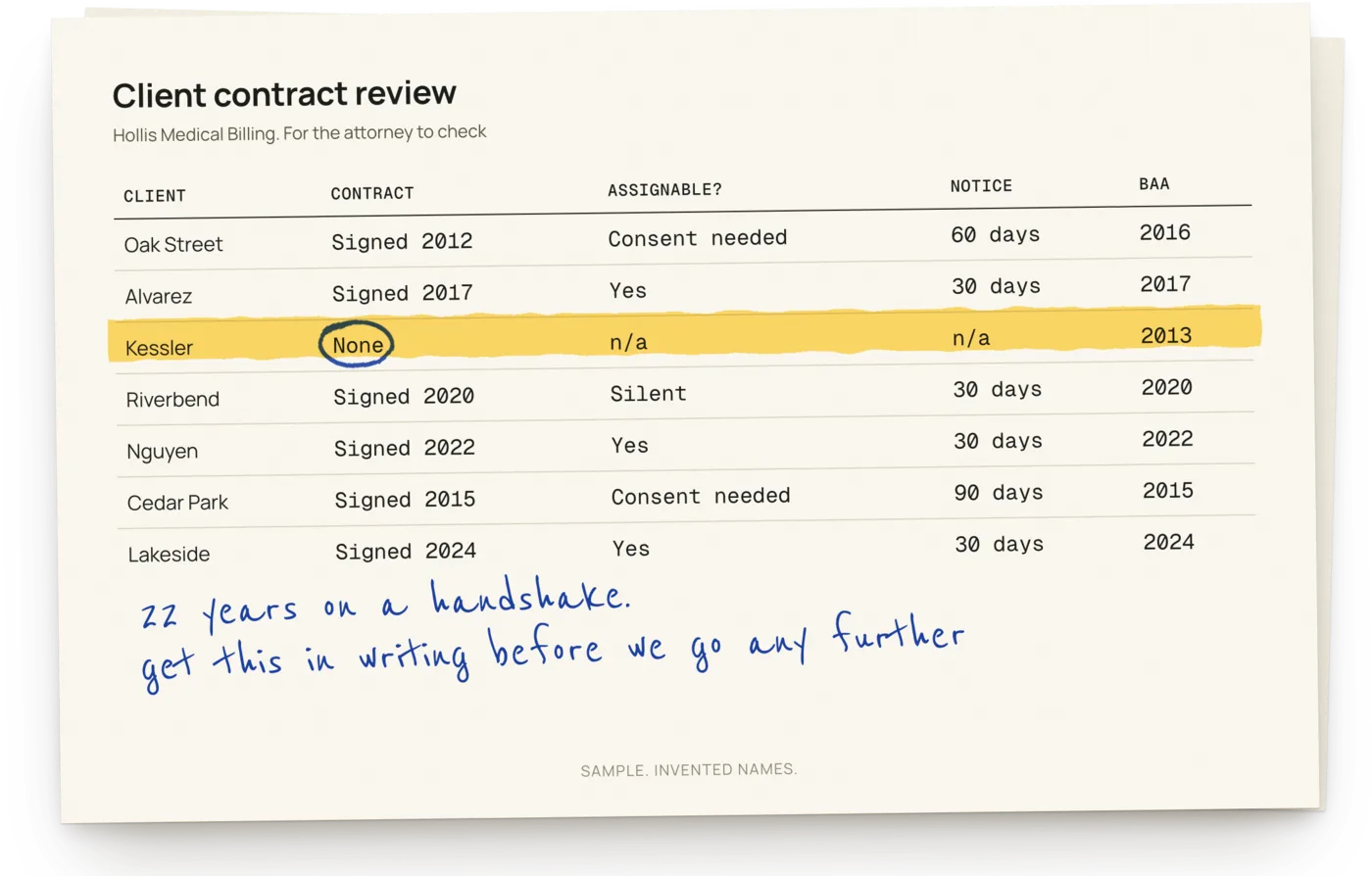
When someone buys your client list, they’re buying relationships you can’t actually hand over by yourself. Each client’s contract decides how much say that client has, so go through them before you start talking to buyers. Have an attorney read them too, since what follows is only a general guide.
The four things to look for
Pull each contract and find the answers to these questions.
Can it be assigned? An assignment clause says whether you can transfer the contract to someone else. It might allow it freely, require the client’s written consent or forbid it. If the contract says nothing, state law may decide, so ask your attorney.
How can the client leave? A 30 day notice period means a client can walk away a month after the sale, whatever the contract says about assignment. A buyer will pay less for that than for a longer commitment.
Is there a change of control clause? If you’re selling the company itself instead of its contracts, the contracts may stay in place, unless a clause says otherwise. That’s one reason sellers and buyers argue about asset sales and stock sales.
What about the BAA? The HBMA article on company value suggests making sure a contract or BAA allows assignment to a new buyer. In practice a new owner’s BAA is often signed fresh, and our guide to HIPAA during a sale covers why.
A simple grid like the one at the top of this page is all you need. It also makes your attorney’s review quicker and cheaper.
Clients with no written contract
This is common at the small end. You’ve billed for a family doctor for 22 years on a handshake, and you’ve never needed anything more.
A buyer has a problem with that, because there’s no contract to transfer and nothing that says what that client agreed to pay. The client can leave at any time, so that revenue may be valued lower.
There’s a compliance gap to fix too. If you handle patient data for a practice, you need a Business Associate Agreement with them, whatever the arrangement on fees. If a client’s BAA is missing or very old, sort that out whatever you decide about selling.
The best time to get a contract signed is well before you plan to sell, as ordinary housekeeping. If you’ve already decided to sell, ask your attorney how to go about it, because a client may reasonably feel misled if you sign them to a new agreement and announce a sale a month later.
When a client says no
Some clients will refuse to consent, or use the moment to leave. Plan for that up front by agreeing with your buyer on these questions:
- Which clients must consent before the deal closes, if any?
- What happens to the price if a large client says no?
- Who keeps a client that won’t transfer? You may be stuck serving them, or you may need to give notice.
- Can the buyer offer a new agreement directly, and at what fee?
Don’t forget your own obligations
Check for anything else that could get in the way. That can include a term saying you’ll give a client a certain amount of notice, a promise that a named person will do the work, or an old non compete from when you bought part of your own book. If you’ve ever had a partner, make sure they’ve got no claim on these clients.
Once you know where each contract stands, you can plan how to tell your clients.
Fieldstone may be a buyer in a sale like this, so read this guide with that in mind. It's general information, and it isn't legal or tax advice.