For billing company owners
What a buyer asks for when you sell a billing company
What a buyer will ask to see when you sell a billing company, in the order it usually comes up, and how to share it without exposing patient data.
3 minute readBy the Fieldstone Billing teamUpdated
Due diligence is the stretch where a buyer checks that what you’ve told them is true. It can feel intrusive after years of running your own shop, and most of it’s just matching your numbers to your bank statements.
You don’t hand it all over at once. Here’s a sensible order.
Before any NDA
General facts are enough at this stage, and none of them identify a client: roughly how many clients you have, what specialties, your rough annual revenue, how many people work with you and when you’d like to step back. A serious buyer won’t ask for more until an NDA is signed.
After the NDA
This is where the real numbers come in.
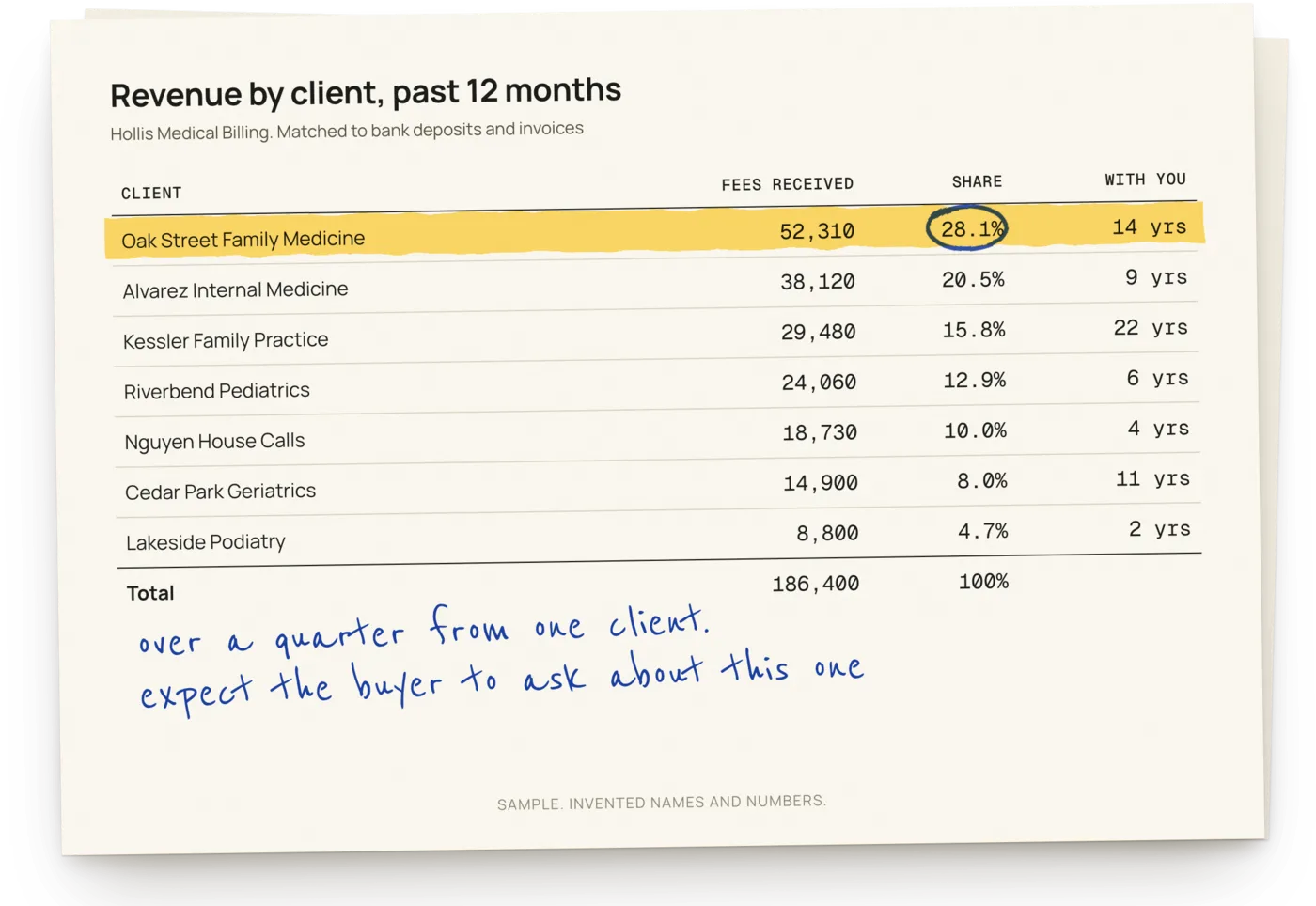
- Revenue by client for the past 12 to 24 months, supported by invoices and deposits
- Profit and loss statements and tax returns for two or three years
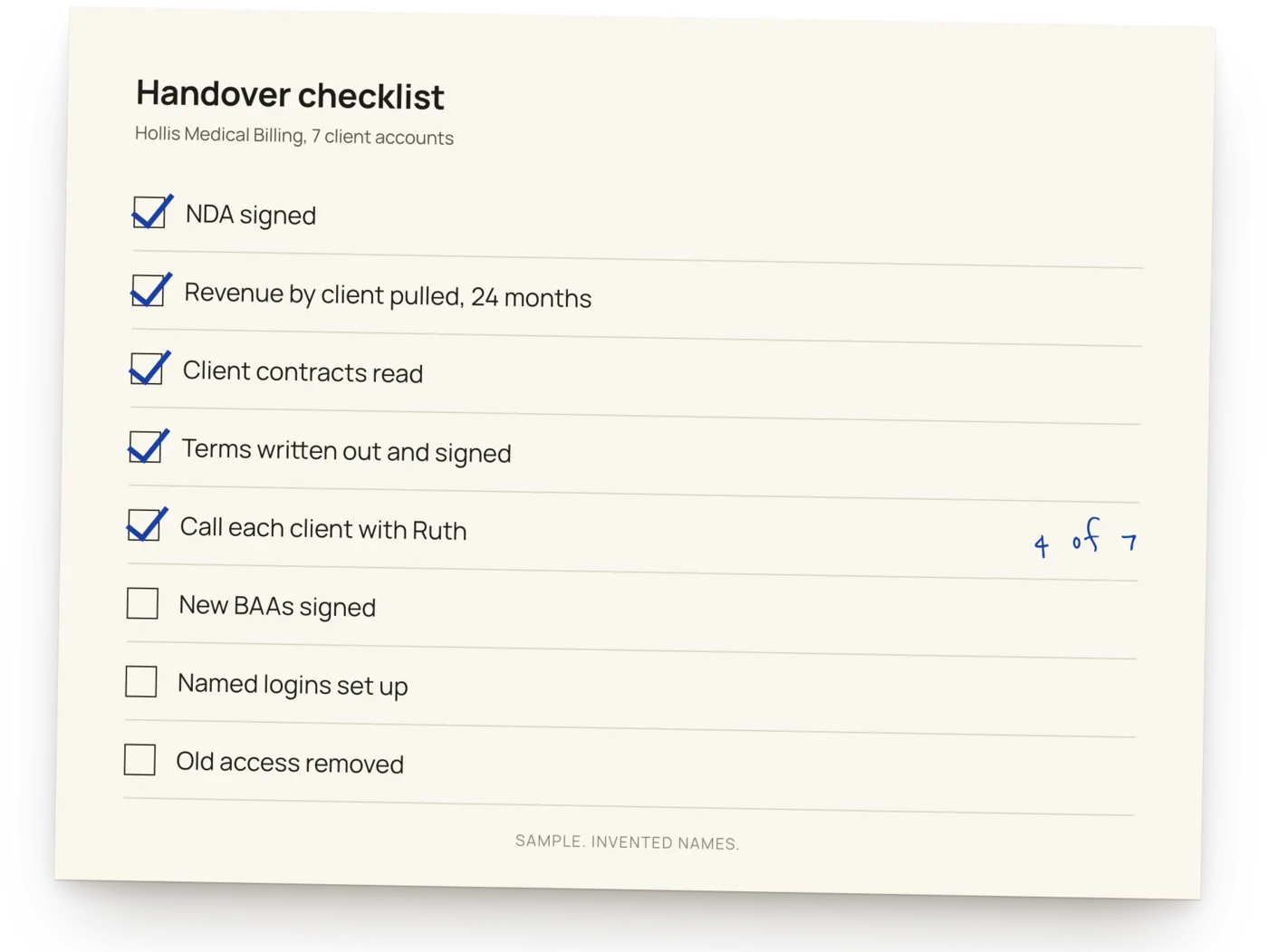
- Client contracts and their Business Associate Agreements
- Services per client, such as billing, credentialing or coding
- Claim volumes and denial rates, if your reports show them
- Staff and contractors, with what each one does and costs
- Software, clearinghouse and other vendor contracts
- Any security incidents, complaints, disputes or payer audits
A 2021 HBMA article on selling billing companies says valuation usually looks mostly at the trailing 12 months, and also looks at the revenue trend over the past three years. So if you only pull one report early, make it revenue by client, like the sample at the top of this page.
Keep patient data out of it
A buyer doesn’t need to see a single patient to judge your business. Your Business Associate Agreements limit what you’re allowed to do with protected health information, so send totals by client. Claim and denial reports should be summaries with no patient names, dates of birth or member IDs. If a buyer asks for claim level data, talk to your attorney first. Our guide to HIPAA during a sale has more on this.
Your client contracts may also have confidentiality terms of their own, so check before you share client names, even under an NDA. Some sellers use “Client A” and “Client B” until the deal is close.
What makes buyers nervous
They’ll ask more questions when they see these, so have your answer ready:
- One client bringing in a large share of revenue. That HBMA author treats more than 25% from one client as a possible risk.
- Revenue that doesn’t match deposits
- A client who’s months behind on invoices
- Clients with no written contract
- A client who only ever speaks to you
- Falling revenue with no explanation
None of these has to end a deal, but each one might change the price or the structure. A buyer who finds a problem you didn’t mention will start to wonder what else is in there, so it’s nearly always better to raise it yourself.
You should check the buyer too
Remember that you’re the one taking a risk if you’re paid over time. Ask for references from anyone else who’s sold to them. Ask who’d work your accounts, how their other clients are doing and whether they can afford what they’re offering. If they’re new at this, as we are, ask how they plan to pay you if things go slowly at first. A good buyer won’t mind you asking.
Fieldstone may be a buyer in a sale like this, so read this guide with that in mind. It's general information, and it isn't legal or tax advice.