For practices
How to work aged A/R and which claims to start with
Which aged insurance claims to chase first and what to check before you call, along with how to decide when a balance should be written off.
3 minute readBy the Fieldstone Billing teamUpdated
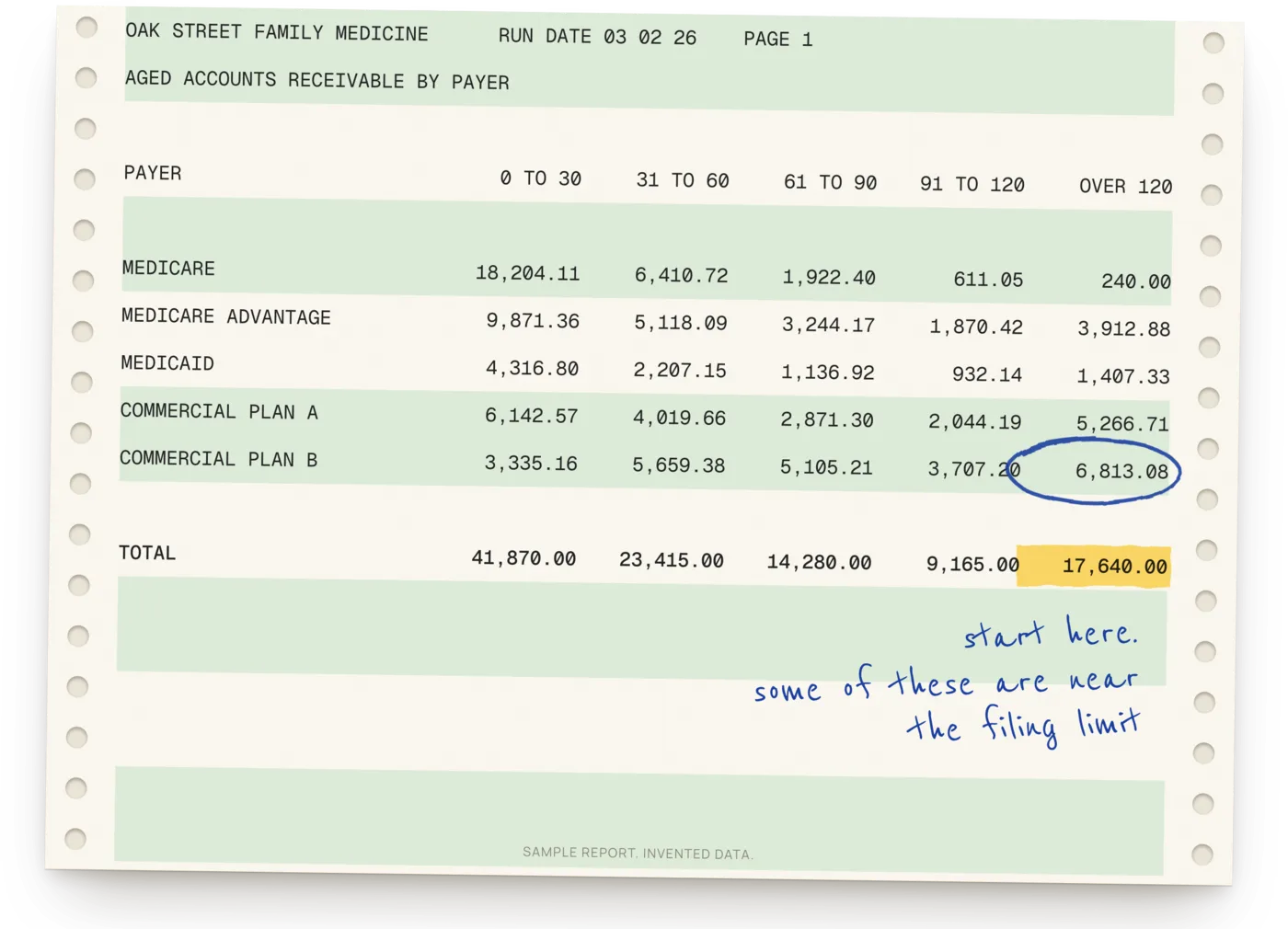
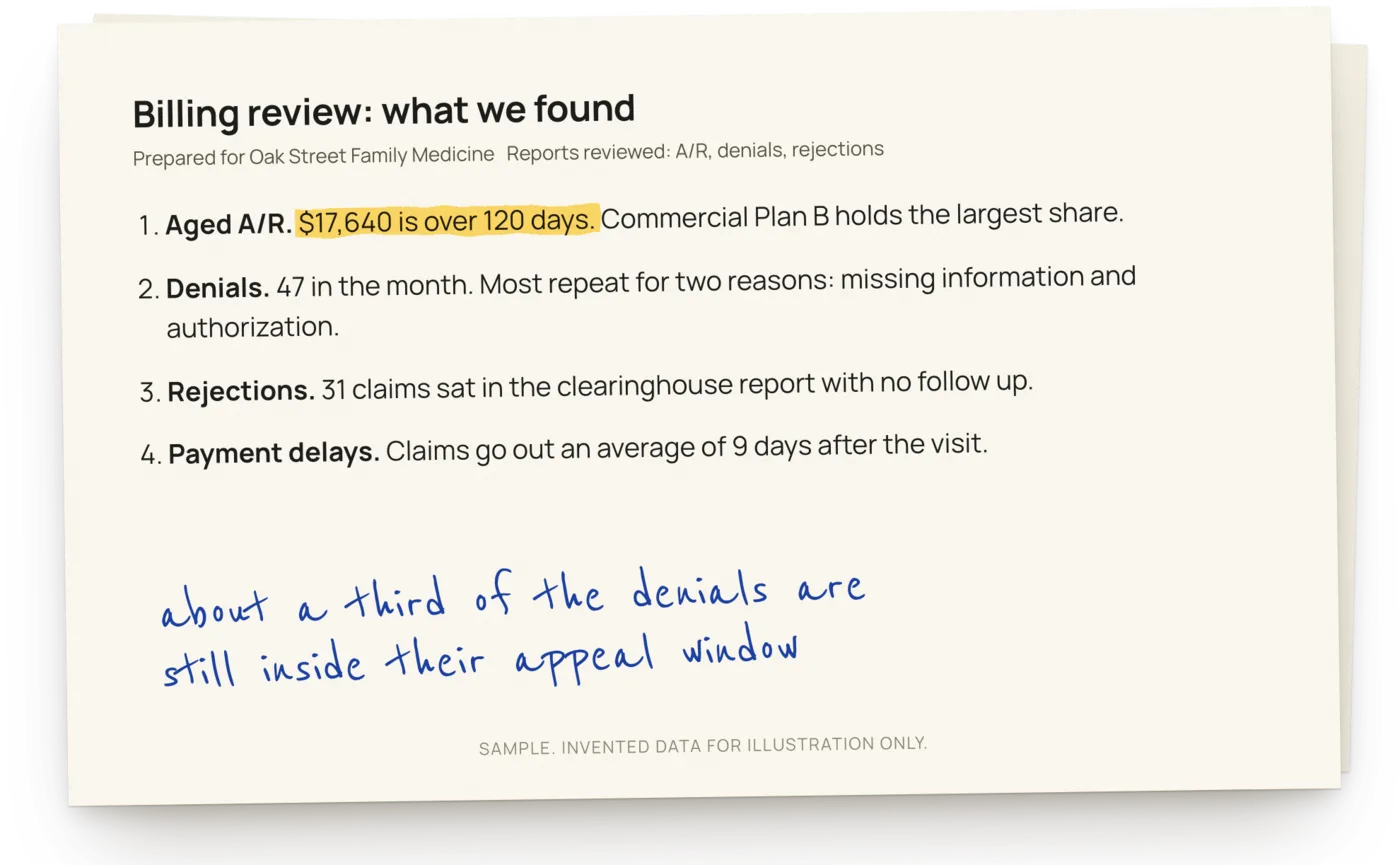
When someone inherits a long aged A/R report, the instinct is to sort it by age and start at the top. That tends to be a poor place to start, because the oldest claims are often the least likely to pay. Begin with the claims that have the best chance of paying, and let the oldest ones wait their turn unless a deadline says otherwise.
Clean up the report before you call anyone
Some of what’s on an aged report doesn’t belong there, and you don’t want to sit on hold for twenty minutes to learn that. Go through the list first and pull out claims that were paid but never posted, balances that have already moved to patient responsibility, and contractual amounts that should’ve been adjusted off.
Say the report shows $400 still open with a commercial plan. You call, and the rep tells you it paid in March. The payment came in and nobody posted it, and a search of your remittances or deposit records would’ve told you that before you picked up the phone.
Look up the deadlines
Next, find the filing and appeal limits for each payer on the report. Medicare generally allows one calendar year from the date of service to file a claim. Commercial limits depend on the contract and they can be much shorter, so look at the contract itself and don’t go by memory. Our guide to timely filing limits goes through them in more detail.
Once you have the dates, mark which claims are still inside their window and which are past it but might fit an exception.
Decide what to work first
Two things set the order, how much the claim is worth and how close it is to a deadline.
High value claims near a deadline get worked first, since that’s where waiting costs you the most. High value claims with more time come next. Low value claims near a deadline shouldn’t be worked one at a time, so batch them by payer and reason. If 30 small claims at one payer all denied for the same missing referring provider, one call or one fix might clear most of them, and you’ve saved yourself a lot of time. Anything past the limit with no exception goes in its own pile to review for write off.
Find out why each claim stalled
When you check status, the first thing to find out is whether the payer received the claim at all. If it did, ask what happened to it and what the payer needs from you next. Write the answer on the account along with the date and the reference number. Otherwise the next person to open that claim, who may well be you in six weeks, is going to make the same call and start over.
Fix it, then put a date on it
Send a corrected claim or an appeal, whichever fits, and set a date to check again. Pick a date that fits how long that payer tends to take. A resubmission with no follow up date is how a claim ends up aged a second time.
Writing off what’s left
Some balances can’t be recovered, and leaving them on the report doesn’t help anybody. Record why each one is being written off, using the same short list of reasons each time, and have the right person approve it. Then go back and read those reasons. If “past filing limit” keeps turning up for one payer, you know what to fix so the same loss doesn’t happen again.
Keeping track of the results
Keep a count by payer of what was worked, and of what came out of it in recoveries and closed balances. If you hand this work to an outside company, those numbers are how you can tell whether it’s doing the job. You can see how our A/R recovery projects are scoped.