For practices
What a medical billing audit should check
Which reports to ask for in a billing audit and what to look at in each one, so you end up with findings you can act on.
2 minute readBy the Fieldstone Billing teamUpdated
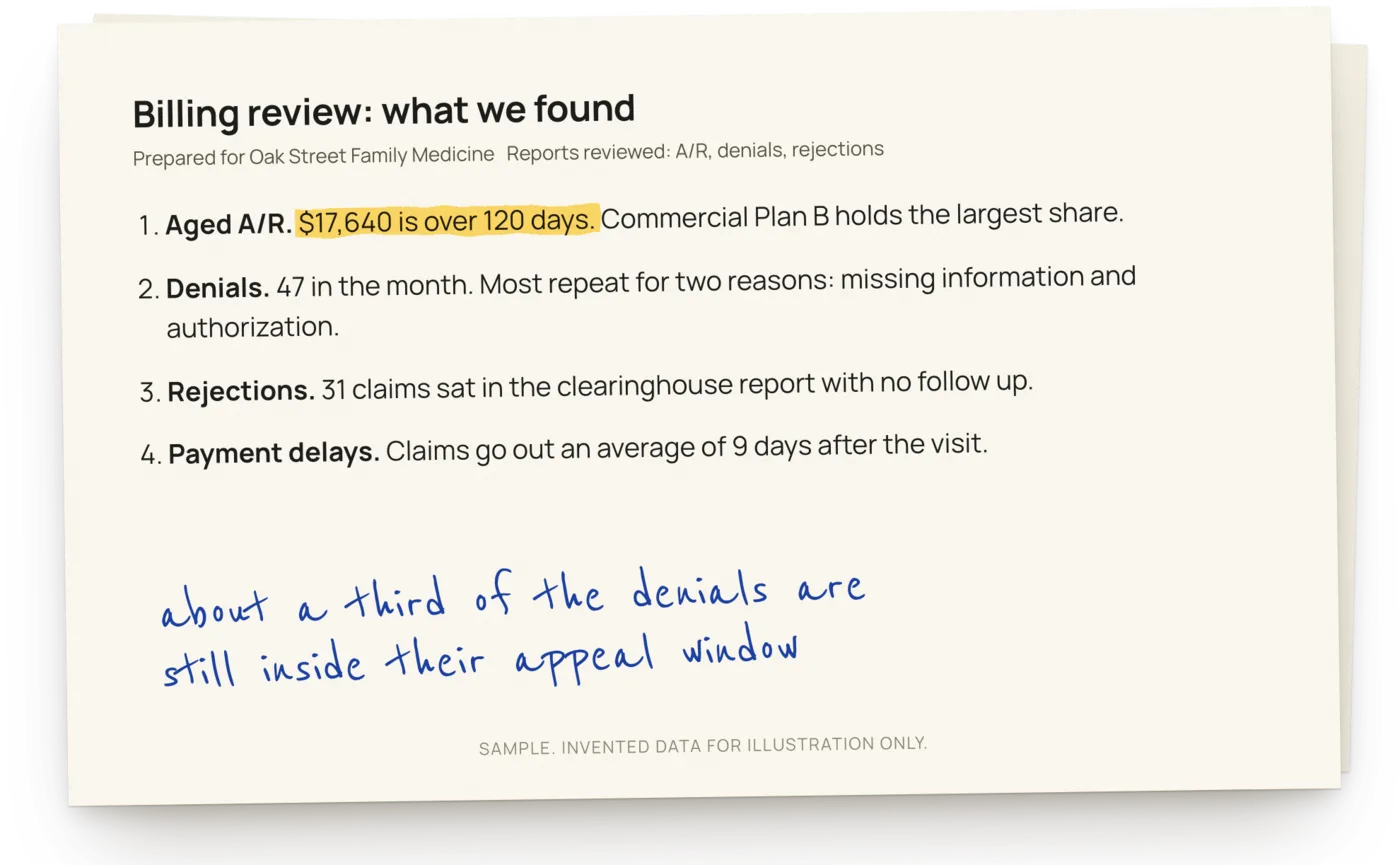
A billing audit should tell you where money is being lost and how much of it you can still recover. To get to that answer, someone has to go through five areas of the billing, and the totals on a monthly summary won’t show you most of it.
What to look at
Start with aged accounts receivable. Ask for A/R by age and by payer. A growing balance over 90 days is often a sign that follow up is falling behind. Also check whether the old balances can still be collected at all, because some may have passed their filing limits and are only sitting there making the report look better than it is.
Denials come next. Group them by reason, by payer and by whether anyone worked them. That last grouping tells you the most, since a denial nobody touched is often lost by default.
Rejections need their own look. Claims rejected before the payer processed them may not appear in denial reports at all, so ask for the clearinghouse rejection reports separately.
For payment delays, measure the time from visit to claim, and from claim to payment. When claims take weeks to go out, that’s an internal issue. When they go out quickly and then take a long time to get paid, it may point to a payer or a claim quality problem.
The last area is workflow. Ask who owns each step, and what happens when that person is away. A claim needing a provider’s answer can wait for weeks unless someone is responsible for asking again. Think of a coding question sitting in a physician’s inbox during two weeks of vacation, with the biller assuming it’ll get answered at some point.
Reports to request first
- Aged A/R by payer and by claim age
- Denials by reason, payer and status
- Clearinghouse rejection report
- Collections by month for the past 12 months
- Adjustments and write offs by reason
Be careful with any single number
A low denial rate may mean claims are clean, or it may mean problems are being written off. A high collection rate may leave out amounts that were adjusted away. Look at how each number was calculated before you take any comfort from it.
Sharing data safely
Start with summary reports, and share only what the review needs. If an outside party will see protected health information, you should have a Business Associate Agreement in place first.
What you should have at the end
A useful audit gives you specific findings in writing, including which balances can still be pursued, which denials repeat, what caused them and who should fix them. You should be able to act on it even if you never hire the company that wrote it. Fieldstone offers a free medical billing audit on these terms.
An audit can also find money flowing the wrong way. If a review suggests a possible overpayment, get advice, because Medicare has report and return rules for overpayments and those rules come with deadlines.