For billing company owners
How to close a medical billing business if you don't sell
How to wind down a billing company with no buyer, including notice to clients, open claims, returning patient data, final invoices and what to keep.
3 minute readBy the Fieldstone Billing teamUpdated

Sometimes selling doesn’t work out. The client list may be too small, the timing may be wrong or you may just prefer to finish things yourself. Closing carefully still takes months, though, because your clients’ claims keep aging whether you’re ready or not.
If you’re on the fence, it’s worth having one conversation about selling first, because even a small client list might be worth something to another biller. If you’ve decided, here’s how to go about it.
Start with the contracts
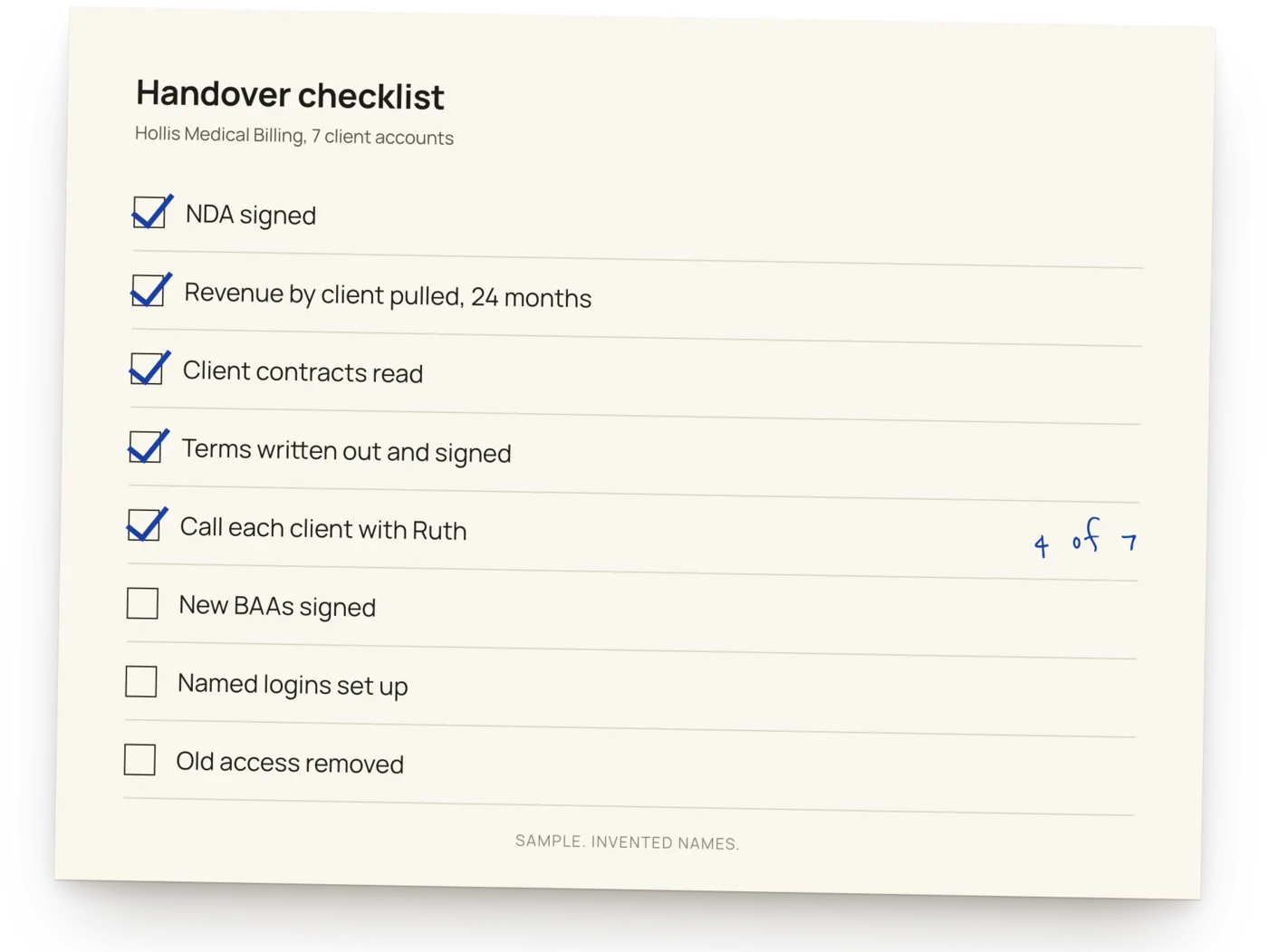
Read each client’s contract for its notice period and anything it says about ending the relationship, such as handing back records or finishing open claims. The longest notice period sets your earliest finish date. Then give more time than the contract requires if you can, since a practice can’t replace its biller in 30 days without some risk.
Check your own contracts as well, including your software, clearinghouse, insurance, lease and any staff agreements.
Tell clients personally
Call each client before anything goes out in writing, then confirm it by letter with the end date. Give them your recommendation if you have one. Referring them to a biller you trust is a real help, and you might be able to agree a referral arrangement. Ask your attorney first, because payments for healthcare referrals can raise legal questions.
Plan what happens to open claims
This is the biggest risk for your clients. Agree with each one on a date of service after which new claims go to the new biller, and on who works what’s still open from before that date. There are two usual approaches: you run out the old claims for a period, or everything moves to the new biller on one date.
Either way, give each client a list of open claims and aged A/R, along with any filing and appeal deadlines coming up. Our guide to timely filing limits explains why those dates matter.
Your final invoices need thought too. If you bill on payments received, decide how you’ll be paid on money that arrives after you’ve stopped work, and put it in writing.
Give back access and data
Every client should end up with their own data and full control of their logins. Remove your access account by account, and keep a note of when you did it.
HIPAA requires a BAA to say that when the contract ends, you’ll return or destroy the protected health information you still hold, if feasible. So go through laptops, backups, email, scanned files and paper, and get each client’s agreement on which it’ll be. Use a proper shredding service for paper and keep the certificate. Our HIPAA guide has more on this.
The business side
- Staff. Give as much notice as you can, and have an attorney check final pay rules in your state.
- Insurance. Ask your agent about errors and omissions coverage after you close. A claim can surface long after the work was done, and you may need what’s often called tail coverage.
- Records. Keep your business, tax and HIPAA documentation. HIPAA’s security rule requires required documentation to be kept for 6 years, and your accountant can tell you what else to keep.
- Tax and registrations. Your accountant should handle final returns, and closing your business registration and accounts. Don’t dissolve the company until the final payments have come in.
- Contact details. Keep a phone number or email working for a while. A client or payer will probably need you after you’ve closed.
A rough timeline
| When | What to do |
|---|---|
| 6 months out | Read contracts, talk to your attorney and accountant |
| 4 months out | Tell clients and staff, and suggest a new biller |
| 2 months out | Agree on the claim cutover and start moving access |
| At the end | Hand over open claim lists, remove access |
| After closing | Return or destroy data, send final invoices, file final returns |
If you’ve got less time than that, tell clients sooner and focus on open claims and data first. Those are where they could get hurt.
Fieldstone may be a buyer in a sale like this, so read this guide with that in mind. It's general information, and it isn't legal or tax advice.