For practices
How to switch medical billing companies and keep old claims moving
A plan for changing billing companies step by step, covering contract checks, who handles the old A/R, data access and the first 90 days.
3 minute readBy the Fieldstone Billing teamUpdated

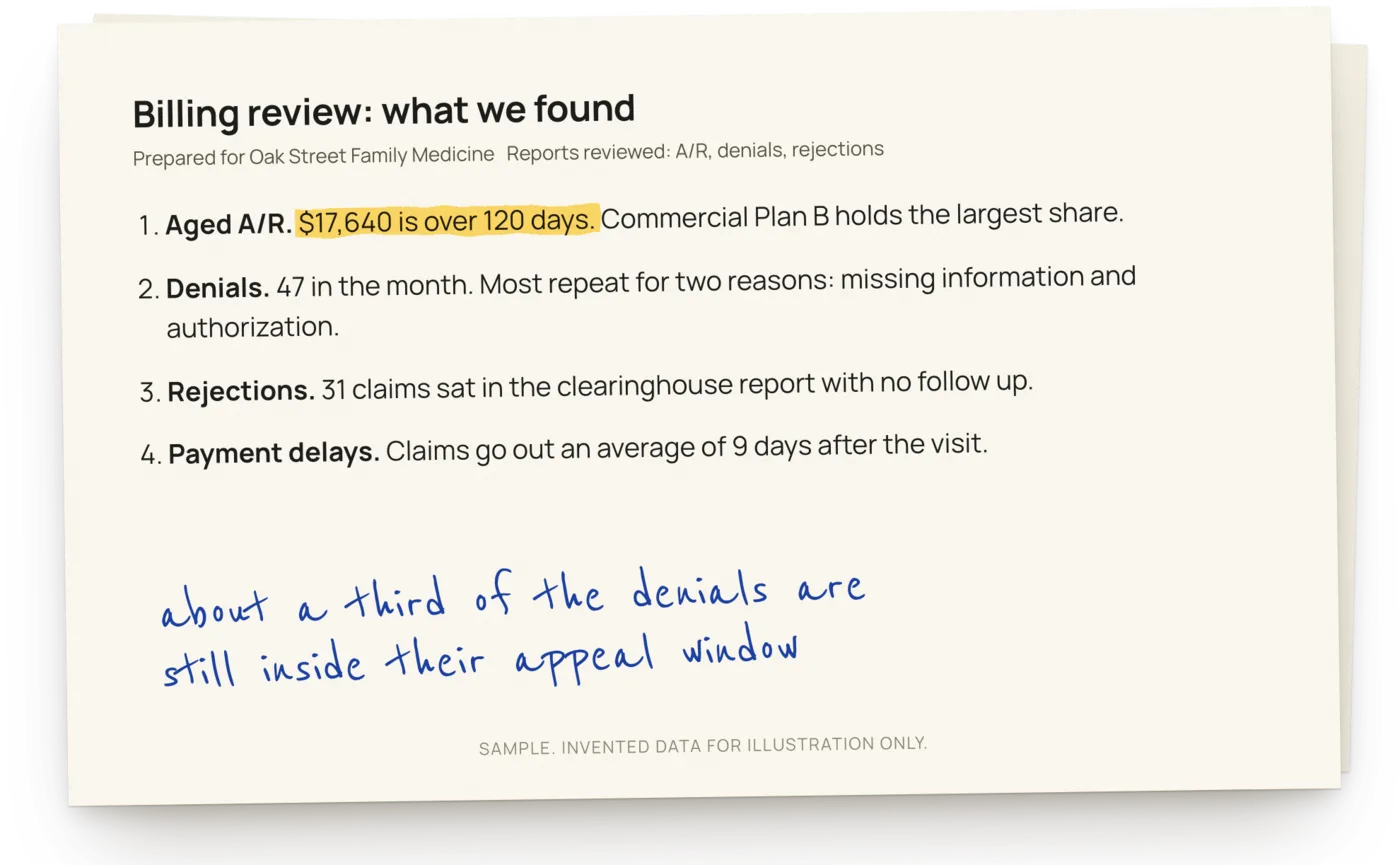
Changing billing companies is mostly a question of timing and of who owns what. The danger sits with the claims that fall between the two companies during the change. Say a claim from the old company’s last week gets denied a month after the switch. The old company thinks its contract is over, the new one thinks the claim isn’t theirs, and the appeal window keeps running while nobody works it.
Read your contract before you give notice
Go through your current contract and write down:
- The notice period, and how notice must be given
- Who works open claims and old A/R after the end date, and for what fee
- How long you’ll keep access to your data and reports
- Any fees charged on the way out
- Who owns the clearinghouse and payer portal accounts
Get your data first
Have these in hand before the relationship changes. It’s a lot easier to ask for reports while everybody’s still on good terms.
- An aged A/R report by payer
- A denial report covering the past 12 months
- Collections by month
- Any payer contracts and fee schedules
- A list of logins for your clearinghouse, payer portals and EHR, in your practice’s name
Your practice data should be yours. If access is in the old biller’s name, resolve that first.
Decide who owns the old A/R
There are two common options. In a run out, the old biller works claims with dates of service before the switch, and the new biller works everything after. In a take over, the new biller takes old claims as well, usually as a separate project.
Either can work. The danger is leaving it unclear, so that each company assumes the other is responsible. Put the agreed split in writing, and set a date to review what remains.
Planning the changeover
- Pick a date of service for the switch, and tell everyone.
- Update the billing contact details with payers, where needed.
- Check that enrollment, EFT and ERA settings still send payments and remittances to the right places.
- Sign a Business Associate Agreement with the new company before it accesses patient data.
- Remove the old biller’s access on the agreed date.
ERA enrollment is a common snag. If the new company uses a different clearinghouse, remittances may keep going to the old one until the enrollment is changed, and how long that takes depends on the payer.
Payments should keep going directly to your practice account throughout, so the change shouldn’t affect where your money lands.
The first 90 days
Expect some disruption, and watch these numbers each week:
- Claims submitted compared with visits
- Rejections and how quickly they’re cleared
- Collections compared with your baseline
- Open questions waiting on your staff
Collections can lag for a while, because payers pay claims weeks after the visit. A temporary dip doesn’t always mean something’s wrong, so ask for an explanation you can check against the claims.
Choosing the new company
Ask to see what they’d measure, how they’d report it and who’d do the work. Look at the total cost of the pricing along with the rate. And before you choose, get an independent review of your current billing, so you have a baseline to measure from.