For practices
What to do when your biller quits or retires
The first steps when your biller quits or retires, including who has access, which claims are at risk, upcoming deadlines and keeping cash coming in.
2 minute readBy the Fieldstone Billing teamUpdated

When a biller leaves, the work stops, and for a few weeks nothing looks wrong. If your biller’s last day is the end of March, April’s deposits still look normal because they’re paying for claims filed in February and March, and it can be May before anyone sees the drop. By then claims have been aging for weeks. A short plan now can avoid most of the damage.
If you have notice
- Make a list of the systems they use, and confirm that your practice owns each login.
- Ask them to write down their routine, including what they do daily, weekly and monthly.
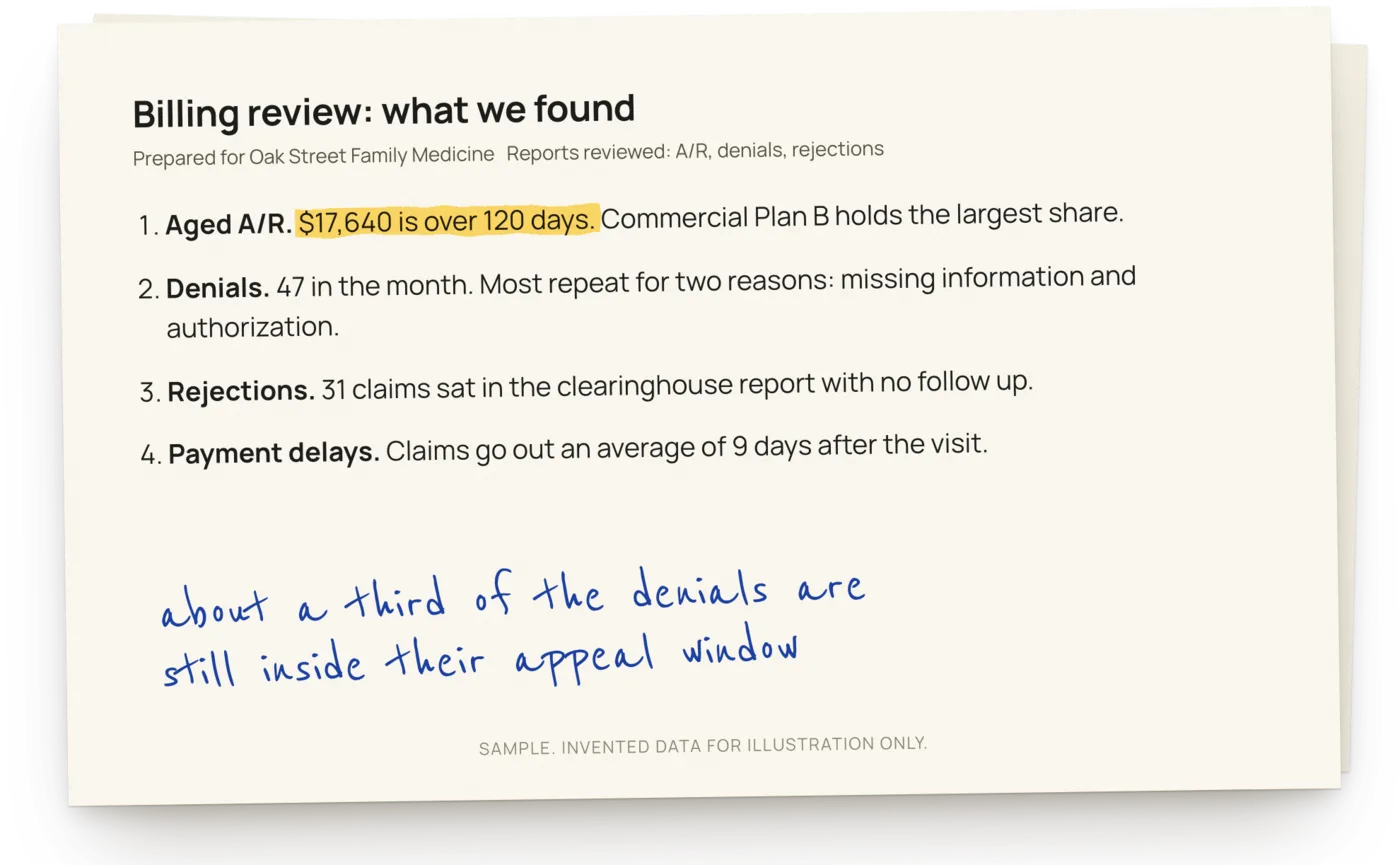
- Get a current aged A/R report and a list of open denials.
- Ask which payers or claims need special handling.
- Ask which deadlines are coming up.
The first week
Start with access. Remove the former biller’s access on their last day, following your HIPAA procedures, and keep your own administrator access.
Then keep claims going out. New claims are the priority, since filing limits start from the date of service. Even if someone in the office can only get the clean, routine claims out for now, that’s worth doing.
Next, check that payments and remittances are still being received and posted. Look at the clearinghouse report as well, because rejected claims are easy to miss and they should be cleared. And tell your staff who to ask, because the front desk will have questions and they shouldn’t go unanswered.
The first month
- Sort open A/R by value and filing deadline.
- Work the denials nearest their appeal limits.
- Compare collections with the same period last year.
- Decide whether to hire, outsource or combine both.
Hiring or outsourcing
Hiring takes time, so you may need temporary cover either way. Compare the costs of each option. If you bring in an outside company, get a Business Associate Agreement signed before it accesses patient data.
If things were already behind
Departures sometimes reveal problems nobody knew about, such as old denials or unposted payments. You might open a desk drawer and find a stack of EOBs that never got entered. Don’t assume it all has to be written off. Get it reviewed first, and start with a billing audit so you can see what can still be recovered. If you need help right away, see our free medical billing audit and A/R recovery.
Making it easier next time
- Keep logins in the practice’s name.
- Keep a written procedure for each billing task.
- Train a second person on the essentials.
- Review billing reports monthly, so that any change shows quickly.