For billing company owners
How to sell a medical billing business
What to get ready before you sell your billing business and how to look after clients in the handover, with a look at how deal structures divide risk.
4 minute readBy the Fieldstone Billing teamUpdated

Selling a billing business usually takes longer than owners expect, and it depends more on client relationships than on assets. Starting early gives you more choices. We should also say that we’re looking to acquire billing businesses ourselves, so we could end up on the other side of a sale like this one, and you should read what follows with that in mind.
Working out what you’re selling
You can sell the whole company, which means the staff, systems, contracts and any liabilities that come with them. You can sell your client portfolio, meaning the client relationships and related assets, and the buyer doesn’t buy the company itself. Or you can sell part of your portfolio, handing over selected accounts while you keep working with the others.
A portfolio sale can be simpler than selling the company. Who keeps which liabilities depends on the agreement, though, so ask your attorney. If keeping some accounts appeals to you, read selling part of your client list.
Getting your records together
Buyers will want to see these, and there’s more on what they ask for and when:
- Revenue by client for the past 12 to 24 months, supported by invoices and deposits
- Client contracts, including termination and assignment terms
- The services you provide and how the work gets done
- Your payer mix, claim volumes and denial rates
- Staff or contractor responsibilities
- Your HIPAA practices and any security incidents
You don’t need perfect records, but they do have to be accurate. Problems found during diligence do more damage than problems you raise yourself, so if you had a security incident two years ago or a client has been months behind on invoices, tell the buyer before they find it.
Deciding how long you can stay
How long you can stay involved shapes the whole deal. A buyer who pays over time depends on clients staying, and clients tend to stay when they’ve had time to meet the new team with you still in the room. So tell the buyer where you stand on your health, your plans and your date, and if you need to leave soon, say so at the start. Our retirement checklist is a good place to begin.
Where to look for a buyer
You can list with a broker, approach a buyer directly or talk to someone you already know in the industry, such as a colleague at another billing company. A broker can widen the search and manage the process, and usually charges a fee. A direct conversation can be quicker and more private, but you’ll need your own advisers to check the terms. Our guide to using a broker or selling directly goes through the choice.
Either way, keep client names out of the first conversations. You can have useful early talks without sharing names or numbers, and the buyer should sign a non disclosure agreement before you share either one.
What can make a sale fall apart
Look for these early, while you still have time to fix them:
- Revenue that can’t be matched to deposits
- Contracts that nobody can find, or that were never signed
- Clients who only ever speak to you
- Missing Business Associate Agreements
- A timeline that leaves no room for client introductions
If your oldest client has been with you for twelve years on a handshake, that’s an easy conversation to have this year, when you can just ask them to sign something. It gets harder once a buyer is asking to see the contract and you’re trying to get it done without saying why.
How you get paid
The main options are cash at closing, a seller note, and payments tied to future revenue. Each divides risk differently, and they can be combined. Anything paid after closing carries some risk for you, since your payments can drop if clients leave or the buyer performs poorly. Our guide on revenue share and seller financing compares the two ways of being paid over time.
Planning the handover
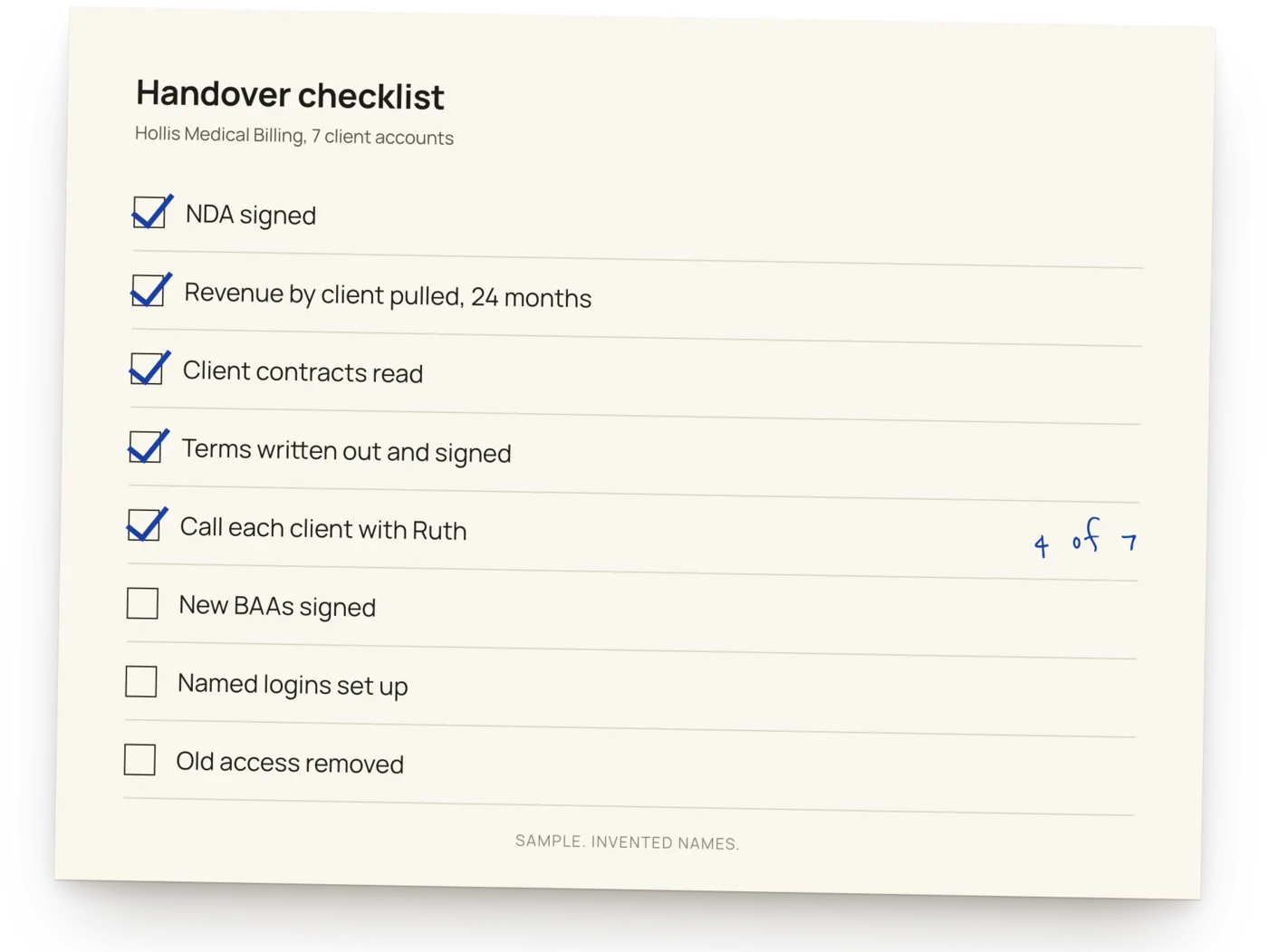
Clients usually stay because they trust you, so a handover needs time and introductions. Agree with the buyer on who tells clients, when they hear it and what they’ll be told. There’s more on that in how to tell clients you’re selling.
Questions to ask any buyer
These apply to us as much as anyone else:
- How will you handle my clients in the first few months?
- Who will do the work, and where are they located?
- How do you handle HIPAA and Business Associate Agreements?
- How and when do I get paid, and how can I verify it?
- What happens if we disagree?
Your own advisers
A sale has legal and tax consequences, so have your own attorney and tax adviser review any agreement before you sign it. This guide is general information only, and it isn’t an offer.
If you’re early in thinking this through, you can read about how to sell your medical billing business to us, and a confidential conversation carries no commitment.
Fieldstone may be a buyer in a sale like this, so read this guide with that in mind. It's general information, and it isn't legal or tax advice.